


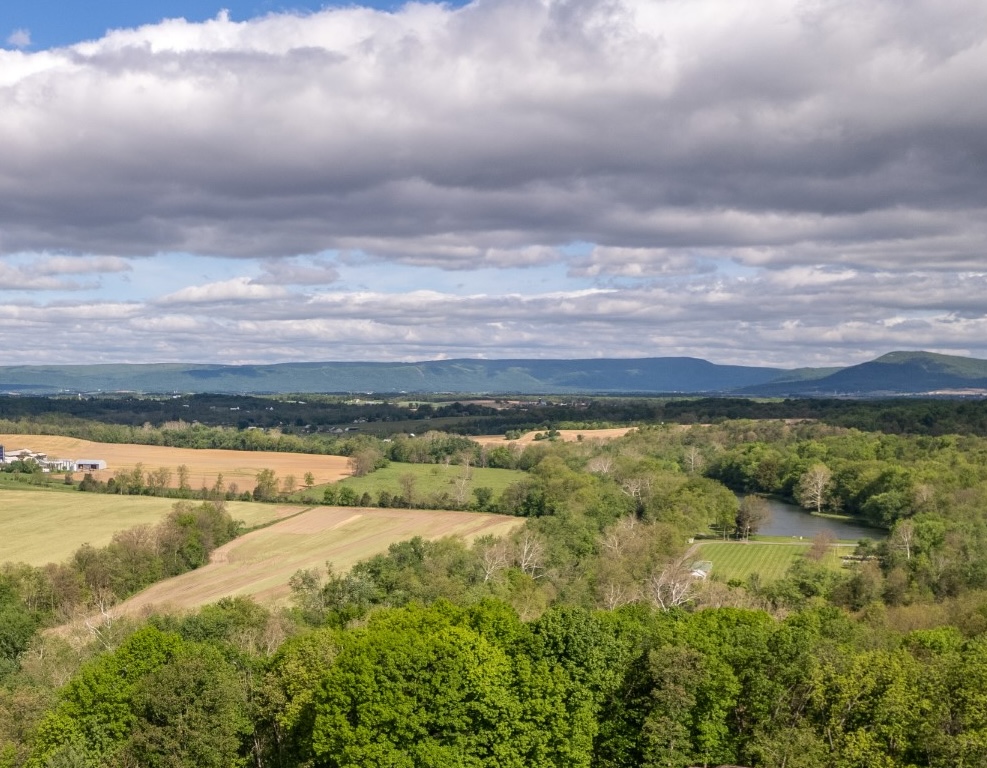
Franklin and Fulton Counties draw land investors because they combine accessible rural acreage with serious county-level planning infrastructure, active farmland preservation programs, and proximity to both Pennsylvania and Maryland markets. Buyers looking for agricultural land, hunting tracts, recreational retreats, or longer-horizon development opportunities are finding that the region's policy environment rewards early, informed positioning.
What Makes This Region Worth a Closer Look Right Now
I've worked large-acreage transactions across Franklin, Fulton, Adams, and the surrounding counties for over two decades, and the conversation around land investment here has shifted noticeably. The questions I'm fielding from buyers are sharper: they want to know what the county's planning direction means for their parcel, whether a conservation easement limits or enhances value, and how non-farm development pressure is being managed at the local level. Those are exactly the right questions to be asking in 2026.
Franklin County is operating under Imagine Franklin 2035, its official land-use, housing, transportation, and farmland-preservation framework, adopted in September 2023 and still the county's governing policy document as of May 2026. That plan matters to land investors because it signals explicitly where the county expects growth, where it intends to preserve agricultural character, and where mixed-use development may be encouraged along identified corridors. Buying a large tract without reading that document is buying blind.
The Franklin County Planning Commission's 2025 Annual Report confirms two active priorities: continued funding of agricultural conservation easements, and promotion of mixed-use zoning along designated growth areas. Those two priorities can pull in opposite directions depending on where your parcel sits, which is exactly why location within the county matters as much as acreage.
Fulton County is less dense and less developed, which is part of its appeal. The county maintains active planning documentation including a draft joint comprehensive plan through the Alleghenies Ahead initiative, signaling that land-use planning is an ongoing conversation there as well. Buyers who engage with that process early are better positioned than those who discover a zoning change after they've closed.
Farmland Preservation: Asset or Constraint?
This is the question I get most often from investors who are new to this market. The short answer: it depends on your goals, and you need to know the status of any parcel before you make an offer.
Franklin County has preserved more than 20,000 acres of farmland, ranking it 10th among all Pennsylvania counties for total acres preserved, according to the county's 2026 proposed budget release. The county's 2026 budget included $745,000 for agricultural land preservation, and in March 2026 the commissioners approved $368,667 in county funds that leveraged an additional $1,409,836 in state money, a combined investment exceeding $1.7 million directed at keeping farmland out of development.
If a parcel carries an agricultural conservation easement, development options are restricted. For a buyer whose goal is to farm, graze, or hold land for generational transfer, that restriction may actually stabilize value and reduce tax burden. For a buyer expecting future residential or commercial development, an encumbered parcel is a fundamentally different investment. I verify easement status as a standard step in every land transaction I handle in this region, it's not optional due diligence.
Non-Agricultural Development Pressure and the Data Center Question
One of the more interesting planning developments in Franklin County is the data center ordinance amendment adopted on May 20, 2026. The county launched that process to manage potential data center development while acknowledging it cannot ban lawful land uses or override municipal zoning authority. For large-tract investors, this is a meaningful signal: non-agricultural development pressure is real enough that the county felt it needed a formal policy response.
That policy context also connects to the broader economic development activity across south-central Pennsylvania that has been reshaping land values and investor interest in the region. Industrial and logistics demand doesn't just affect residential markets, it creates ripple effects for large rural tracts that sit in or near identified growth corridors.
Franklin County is also in an active 2026–2046 comprehensive plan update process, meaning land-use rules tied to that review may continue to evolve through late 2026 and beyond. Buyers who want to understand where a specific parcel fits in that evolving framework should review the county's planning materials and, frankly, talk to someone who follows these updates as part of their day-to-day practice. I do.
What Buyers Need to Know Before Closing a Land Deal Here
Large-tract transactions in Pennsylvania carry a few process requirements that differ from a standard residential closing, and investors who are coming from other states or other asset classes sometimes get surprised by them.
Pennsylvania Realty Transfer Tax
Pennsylvania collects a Realty Transfer Tax through county recorders of deeds, and most transactions also carry an additional local realty transfer tax. The Pennsylvania Department of Revenue is the authoritative source for current rates and the required Realty Transfer Tax Statement of Value form used at closing. Who pays which portion of the transfer tax is commonly negotiated between the parties, confirm the allocation in your agreement of sale, and verify the current rates with your title company or closing attorney before you sign anything.
Pennsylvania Seller's Property Disclosure Statement
Under Pennsylvania's Seller Disclosure Law, sellers must provide a signed and dated property disclosure statement before the transfer agreement is signed. For large rural tracts, the practical disclosures often look different than a residential transaction, think well and septic status, access easements, mineral rights, and known environmental issues, but the legal requirement applies. Buyers should read the disclosure carefully and ask questions before going under contract.
Washington County, Maryland Closings
For buyers considering rural land on the Maryland side of my service area, Washington County's recording fee schedule sets the state transfer tax at 0.5% of consideration and the county transfer tax at 0.5% of the remaining consideration after a first-$50,000 exemption. As with Pennsylvania, who pays which portion is a matter of negotiation, the contract controls, not assumptions. Confirm the current rates and allocation with your settlement attorney or title company before closing.
Every land transaction I handle goes through a title company, and I walk my clients through the disclosure and transfer-tax process before we even get to the offer stage. The goal is no surprises at the closing table.
Planning Document Jurisdiction Status as of August 2026 Investor Relevance Imagine Franklin 2035 Franklin County, PA Active, adopted Sept. 2023, governing policy May 2026 Sets growth corridors, farmland preservation zones, and mixed-use areas 2026–2046 Comprehensive Plan Update Franklin County, PA In process, land-use rules may evolve through late 2026 Zoning and development regulations tied to this review Data Center Ordinance Amendment Franklin County, PA Adopted May 20, 2026 Signals non-agricultural development pressure being managed at county level Alleghenies Ahead Joint Comprehensive Plan Fulton County, PA Draft, active planning process Land-use direction for rural Fulton County parcels
Frequently Asked Questions
What kinds of uses are most realistic for big acreage in Franklin County, PA?
Agricultural use, timber, hunting and recreational leases, and conservation easements are the most common uses for large tracts in Franklin County today. Development potential exists along growth corridors identified in Imagine Franklin 2035, but it depends heavily on municipal zoning, the county cannot override local zoning authority. I evaluate each parcel's realistic use options as part of the initial buyer consultation, because the answer varies significantly by location within the county.
How does farmland preservation affect the value and flexibility of large tracts in south-central Pennsylvania?
A parcel encumbered by an agricultural conservation easement has restricted development potential, that's a permanent limitation that runs with the land. For buyers whose goal is farming, conservation, or long-term land holding, that restriction can stabilize value and reduce carrying costs. For buyers expecting future development, it's a dealbreaker. Franklin County has preserved more than 20,000 acres under easement, so verifying encumbrance status before making an offer is non-negotiable due diligence.
What should a buyer know about Pennsylvania realty transfer tax on a land purchase?
Pennsylvania collects a Realty Transfer Tax through county recorders of deeds, and most transactions carry an additional local transfer tax on top of the state rate. Who pays which portion is commonly negotiated between buyer and seller, there is no automatic rule, and the contract controls. Your title company or closing attorney will confirm current rates and handle the required Statement of Value form at closing.
What disclosure does a Pennsylvania seller have to give before closing a land sale?
Under Pennsylvania's Seller Disclosure Law, the seller must provide a signed and dated property disclosure statement before the transfer agreement is signed. For rural land transactions, disclosures commonly cover access easements, water and septic status, known environmental conditions, and mineral rights, though the specific items depend on the parcel. Buyers should review the disclosure carefully before going under contract.
Are data centers or other non-farm uses becoming a planning issue in Franklin County?
Yes, Franklin County adopted a data center ordinance amendment on May 20, 2026, specifically to manage non-agricultural development pressure while acknowledging that the county cannot ban lawful uses or override municipal zoning. For large-tract investors, this signals that industrial and technology-sector demand is actively shaping the county's planning environment. Parcels near growth corridors or transportation infrastructure warrant a closer look at both current zoning and the county's long-range plan.
What county planning documents should investors review before buying acreage in Fulton or Franklin County?
For Franklin County, start with Imagine Franklin 2035 and the Planning Commission's 2025 Annual Report, those two documents tell you where the county is directing growth and preservation resources. For Fulton County, review the county plans page and the Alleghenies Ahead joint comprehensive plan draft. In both counties, municipal zoning ordinances control what's actually permitted on a specific parcel, so the county documents are the starting point, not the finish line.
The Bottom Line on Land Investment in This Region
Franklin and Fulton Counties offer genuine opportunity for land investors, but the opportunity is specific to parcel location, current zoning, easement status, and where each county's planning direction is heading. The buyers who do well here are the ones who do the homework upfront, not after they've signed a contract.
I've spent 22 years working large-acreage transactions across this region, and I know which parcels sit in growth corridors, which are likely preservation targets, and which questions to ask before a client ever makes an offer. If you're evaluating land in Franklin or Fulton County, or anywhere across my south-central Pennsylvania and Washington County, Maryland service area, let's talk through what you're looking for before you start touring properties. The right conversation at the start saves a lot of time and money later.
Reach out to Jay today to start that conversation.
About Jay Starr
Jay Starr is a REALTOR® and Team Leader of The Jay Starr Team at RE/MAX 1st Advantage, with 22 years of full-time real estate experience serving south-central Pennsylvania and central Maryland. With hundreds of homes and land transactions closed, 40+ five-star reviews, and the Certified Luxury Home Marketing Specialist designation, Jay is known for expert guidance on luxury homes, large land tracts, farms, hunting properties, residential estates, and investment properties across Franklin, Fulton, Adams, Cumberland, Bedford, and Huntingdon Counties in PA, as well as Washington County, MD. Clients consistently praise his knowledge, patience, and negotiation skill. Outside of real estate, Jay manages over 10 honeybee hives and harvests local honey, a reflection of his commitment to stewardship, community, and the rural lifestyle many of his clients value.
RE/MAX 1st Advantage · (717) 658-0177
Equal Housing Opportunity. Jay Starr is a Licensed Real Estate Salesperson regulated by the Pennsylvania Real Estate Commission. This article is general information only and is not legal, tax, or financial advice. Readers should confirm their own numbers and transaction details with a qualified attorney, tax advisor, lender, or title/closing officer.